Planning · 7 min read
What to wear on a Desert Safari in Dubai (by season)
A practical, season-by-season guide to dressing for a Dubai desert safari — written by guides who do this every day.
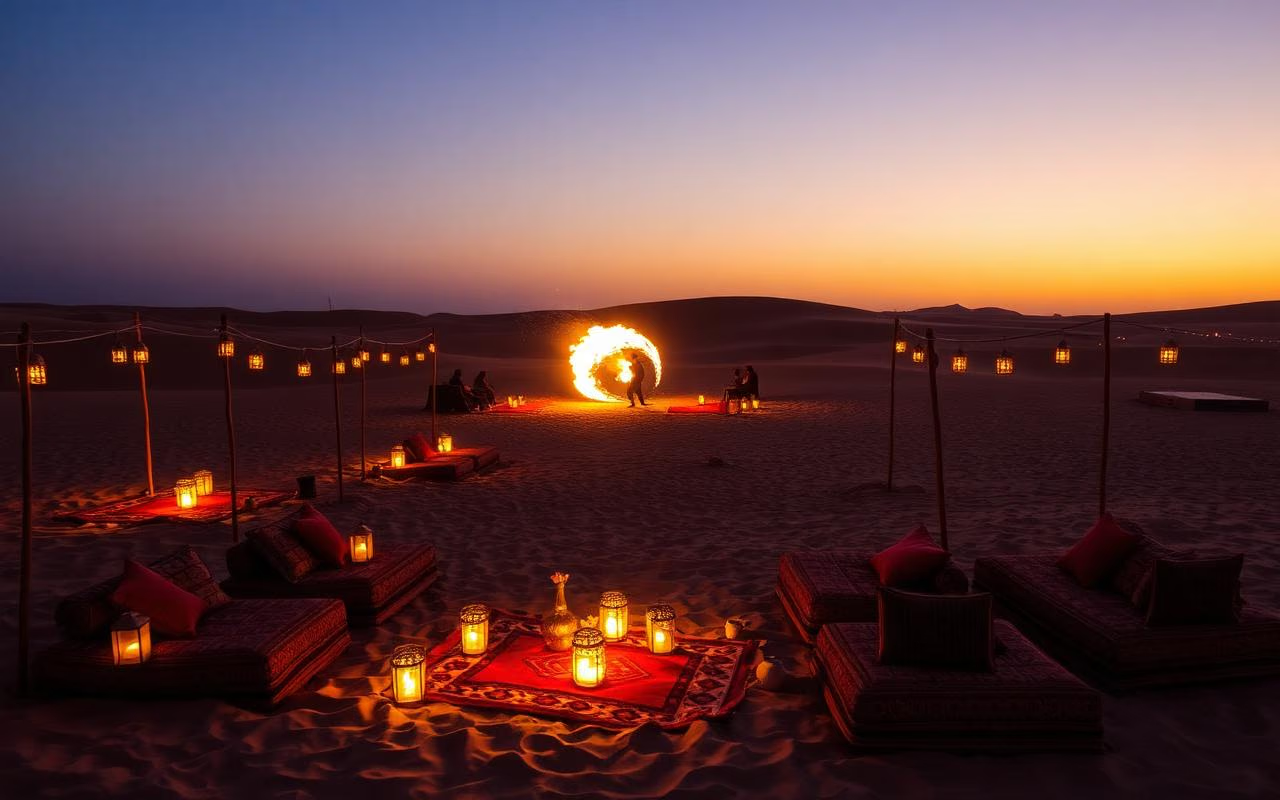
Most first-time visitors overthink this. The desert near Dubai is hot in the day and cool at night, and the answer is mostly about layers, breathable fabric and shoes you don't mind getting sand in. Here is exactly what we tell our own guests when they ask.
Summer (May to September)
Daytime temperatures regularly hit 40°C and can pass 45°C in July and August. Stick to light, breathable cotton or linen, long enough to protect your skin from the sun but loose enough to let air through. A wide-brimmed hat or a buff is more useful than a cap, because it covers the back of the neck during sandboarding. Evenings cool down to around 30°C, so a single layer is enough.
Winter (November to March)
Daytimes are a comfortable 22–28°C, but the moment the sun drops the desert can lose 15°C in an hour. Bring a proper jacket — not a hoodie — for the evening camp, and a scarf if you tend to feel cold. Long trousers are more comfortable than shorts at the dinner table.
Shoulder months (April and October)
The sweet spot. Light layers, closed-toe shoes for sandboarding, and a thin long-sleeve for the drive back.
Footwear
Skip the flip-flops. Sand gets surprisingly hot in the day and surprisingly cold at night, and sandboarding works better with closed-toe shoes. Old trainers are perfect — anything you don't mind shaking out at the end of the night.
Modesty at the camp
Dubai is relaxed about beachwear at hotels, but the Bedouin camp is a cultural space. Knees and shoulders covered is the courteous norm. Nothing strict, just a small gesture that goes a long way with the camp staff.
What to leave behind
- Heavy jewellery — sand gets everywhere
- White trousers — they will not stay white
- Heels — the camp floor is sand
- Bulky cameras — phones are usually enough unless you are a serious photographer
Ready to plan your safari?